May, 2016
Falls among Older Adults in Southeastern Pennsylvania: Health Status and Housing Factors
The CDC reports that one in three adults age 65 or older falls every year, and the rate of unintentional deaths from falls has increased steadily over the past decade. Falls have ongoing negative effects. Falling once increases the risk of future falls, falls can result in broken bones and further complications, and even people who are uninjured by falls may limit their activity after a fall, risking loss of strength and agility.
PHMC’s Community Health Data Base 2015 Household Health Survey includes information about falls and fall risk for 3,260 adults age 60 or older living in Southeastern Pennsylvania. The Household Health Survey is a telephone survey of more than 10,000 households in the SEPA region, including Bucks, Chester, Delaware, Montgomery, and Philadelphia Counties. This article uses data from the 2015 SEPA Household Health Survey to examine falls among adults 60 years of age or older throughout the SEPA region.
In the SEPA region, 22% of adults age 60 or older - about 171,800 adults - have fallen in the past year. Men and women are about equally as likely to have fallen. Falls are most dangerous for those in older age groups. While 19% of adults age 60 to 65 have fallen in the past year, 26% of those in their early 80s and 28% of those age 85 or older have fallen.
Two important issues to consider in falls and fall risk are health status and housing.
Health Status
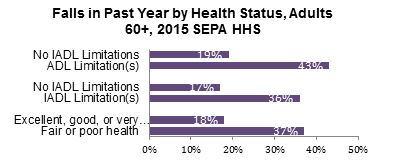
Fall risk is associated with physical and mental health indicators. Activities of daily living (ADLs) refer to basic activities like bathing, dressing, and eating. In SEPA, 43% of older adults with ADL limitations have fallen in the past year. Instrumental activities of daily living (IADLs) refer to more complex tasks like cooking, shopping, and managing finances. More than one-third, 36%, of older adults with IADL limitations in SEPA have fallen in the past year. Additionally, more than one-third of those who describe their health as fair or poor (37%) have fallen in the past year. Mental health status is another important consideration: nearly half of older adults with signs of depression in SEPA (45%) have fallen in the past year.
Housing
Maintenance needs and clutter in the home can increase the risk of falls, while some modifications to the home can reduce the risk. Among those in the region who have fallen in the past year, 41% say it is difficult or very difficult for them to pay their existing housing costs. For this population, making home improvements to reduce fall risk may be a financial challenge. Older adults living alone may have greater difficulty getting assistance after a fall. Across the region, more than one-quarter of older adults who live alone (26%) have fallen in the past year, and within that group 60% want to continue living in their home for the next ten years or more.
The CDC recommends several strategies adults can use to reduce their risk, including:
- talking to their doctors about whether their medications are increasing the possibility of a fall;
- exercising to increase both strength and balance;
- making necessary modifications to their homes to reduce the risk, including railings and grab bars; and
- having their vision checked regularly.